
Table of Contents
- The Case for Vintage Home Decor as an Investment
- Identifying Authentic Vintage Home Decor
- How to Determine the Value of Vintage Furniture
- Best Vintage Decor to Collect for Investment
- Storage, Preservation, and Long-Term Asset Management
- Investment vs. Personal Enjoyment: Finding Your Balance
- Frequently Asked Questions
Last Updated: October 2, 2026
The Case for Vintage Home Decor as an Investment
At Smiths Attic, we've spent years curating pieces that transcend mere decoration. The evidence suggests that is vintage home decor a good investment, carefully selected pieces can indeed function as a legitimate asset class alongside traditional investments.
Not every old item appreciates. Pieces with authentic provenance, superior craftsmanship, and enduring aesthetic appeal often gain value over time. A vintage American Brilliant crystal bowl commands higher prices today than five years ago because scarcity and craftsmanship create genuine market demand.

Unlike stocks or bonds, a vintage piece that appreciates also enriches your living space, tells a story, and becomes conversation-worthy decor. That dual benefit, personal enjoyment coupled with potential financial gain, distinguishes vintage home decor as an investment.
Identifying Authentic Vintage Home Decor
Authenticity is everything. Learning to distinguish genuine pieces from convincing fakes requires attention to specific details that mass production cannot replicate.
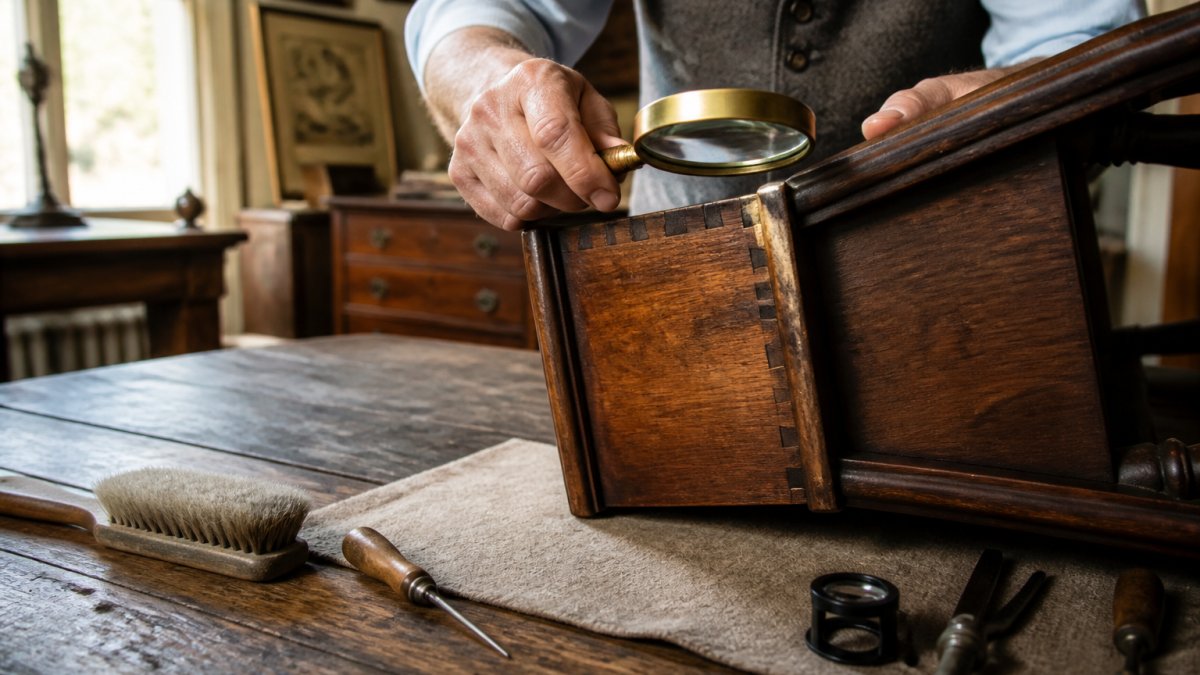
Authentic vintage pieces exhibit dovetail joints, hand-stitched upholstery, or solid wood construction. The American Brilliant Period crystal creamer and sugar bowl set features intricate geometric cuts and notched handles crafted between 1876 and 1917, reflecting labor-intensive processes. Mass-produced items use shortcuts: stapled joints, veneer over plywood, and machine-cut uniformity.
Examine maker's marks and signatures. Limoges porcelain bears factory marks indicating production location and date. Vintage glass often includes embossed patterns or signatures. Their presence suggests legitimacy; absence raises questions. Fake marks rarely withstand close scrutiny under magnification.

Authentic aging creates specific wear patterns. Brass tarnishes distinctly. Wood develops depth of finish that cannot be artificially rushed. Upholstery wears consistently with use. When these elements align naturally rather than appearing deliberately distressed, you're likely looking at genuine age.
How to Determine the Value of Vintage Furniture
Valuing vintage furniture requires understanding factors that drive market demand. Context determines everything.
Provenance and Documentation
Provenance, the documented history of an object, dramatically influences value. A piece with clear ownership history, purchase receipts, or designer attribution commands premium pricing. Documentation eliminates doubt about authenticity and establishes narrative that collectors value.
The strongest provenance includes dated purchase information, previous owner details, or exhibition history. A mid-century modern chair documented as part of a designer's original collection sells for substantially more than an identical unmarked example.
Without provenance, value becomes speculative. The piece may be genuine, may be beautiful, but the uncertainty suppresses price. Collectors understand this trade-off. They pay premiums for documented pieces because documentation reduces risk.
Condition and Structural Integrity
The most valuable pieces exhibit minimal wear, intact original finishes, and sound structural components.
Structural integrity matters most. A chair with loose joints depreciates rapidly once repair costs emerge. Original fabric in good condition adds value; worn or stained upholstery reduces it. Wood pieces with deep gouges, water damage, or veneer separation lose value proportionally to repair expense.
Well-executed restoration enhances value; poor restoration destroys it. Preserve original condition whenever possible. When restoration becomes necessary, choose specialists who understand period-appropriate techniques.
Calculating Appreciation Potential and Market Demand
Research comparable sales through auction results, dealer inventories, and online marketplaces. Track at least five comparable sales across three to five years to establish meaningful trends rather than relying on single data points.
Assess scarcity within the category. Mid-century modern furniture by recognized designers appreciates reliably due to limited production and strong demand. American Brilliant Period crystal commands higher prices than pressed glass because fewer examples survive and craftsmanship was labor-intensive. Mass-produced pieces rarely appreciate because supply exceeds demand.
Evaluate collector interest and market liquidity. Designer furniture, quality porcelain, and decorative glassware with specific provenance typically sell within weeks. Generic "vintage" items may languish on the market. Before purchasing, ask: if I needed to sell this piece in six months, how quickly could I find a buyer at a reasonable price?
Different categories follow different depreciation curves. Mid-century modern typically appreciates; 1980s reproduction typically depreciates; Victorian-era solid wood furniture often appreciates if condition is excellent. Knowing which curve applies informs realistic expectations.
Consider total cost of ownership, including restoration, storage, and insurance. The most sound vintage investments require minimal restoration, can be displayed in your home, and demonstrate appreciation trajectories exceeding carrying expenses.
Best Vintage Decor to Collect for Investment
Mid-century modern furniture ranks among the strongest performers. Designer pieces from the 1950s and 1960s appreciate consistently due to iconic design, limited production, and sustained collector interest.
Decorative glassware, particularly American Brilliant Period crystal and Limoges porcelain, shows steady appreciation. A vintage cobalt blue glass bottle with gold insect design and brass stopper serves as both functional decor and collectible investment, with specificity of design and intricate detailing creating scarcity that supports value.

Furniture with solid wood construction and dovetail joinery outperforms veneered particleboard. Mahogany, walnut, and oak appreciate more reliably than softwood alternatives.
Vintage Cobalt Blue Glass Bottle With Gold Insect Design and Brass Stopper Made →
Storage, Preservation, and Long-Term Asset Management
Vintage home decor requires thoughtful stewardship. Storage conditions directly impact long-term appreciation potential.
Environmental Controls: Temperature and Humidity
Stable conditions, ideally 65-70 degrees Fahrenheit with 45-55% relative humidity, preserve pieces most effectively. This narrow band prevents wood expansion and contraction, which causes joints to loosen, veneers to separate, and finishes to crack.
Basements and attics create environmental instability that damages vintage items. Climate-controlled interior closets or dedicated storage facilities with active humidity management provide superior protection.
Wood furniture is particularly sensitive. Repeated humidity cycles cause wood fibers to separate, joints to fail, and finishes to develop checking. Upholstered pieces absorb moisture, promoting mold and fabric rot. Metal hardware tarnishes in high-humidity environments.
Use a hygrometer to monitor conditions. If storage regularly exceeds 60% humidity or drops below 35%, use a dehumidifier or humidifier. Climate control costs are negligible compared to value loss from environmental damage.
Light Exposure and UV Protection
Ultraviolet rays fade upholstery and wood finishes. Store pieces in darkness or behind UV-protective glass. For displayed pieces, use UV-filtering window treatments that block 99% of ultraviolet radiation.
Fabric fading is irreversible. A vintage chair with original mid-century upholstery loses significant value if sunlight fades it. Reupholstering diminishes the authenticity premium that original materials command.
Material-Specific Preservation Techniques
Different materials require tailored approaches:
Wood furniture: Dust regularly with soft, lint-free cloths. Avoid water-based cleaners that raise wood grain and damage finishes. For solid wood pieces, occasional application of quality furniture wax (not oil-based products that attract dust) maintains finish integrity. Never use furniture polish containing silicone, which builds up and obscures the original patina that collectors value. Store wood pieces away from direct sunlight and heat sources like radiators or fireplaces.
Upholstered pieces: Vacuum gently with upholstery attachments to remove dust without forcing particles into fibers. Protect from spills immediately, water-based stains are easier to address than set-in damage. For valuable pieces, professional upholstery cleaning every 3-5 years removes accumulated dust and allergens without the risk of amateur cleaning methods. Never attempt DIY stain removal on vintage fabrics; improper techniques can set stains permanently or damage fibers.
Decorative glassware and porcelain: Store in padded boxes or display cases that prevent movement and impact. Wrap individual pieces in acid-free tissue paper. Avoid stacking pieces directly on one another. Display on stable shelving away from high-traffic areas where vibration or accidental contact could cause breakage. Handle with clean, dry hands to prevent fingerprints and oils from damaging surfaces.
Metal components: Brass hardware, bronze fixtures, and metal accents tarnish in humid environments. Prevent tarnish by maintaining humidity below 55%. If tarnish develops, professional polishing by conservators trained in antique metalwork prevents damage from aggressive cleaning. Never use commercial metal polishes on valuable pieces; these can remove patina that contributes to authenticity and value.
Pest Prevention and Moisture Management
Insects and rodents damage vintage pieces irreparably. Silverfish consume paper, leather, and natural fibers. Woodworms tunnel through solid wood, creating structural weakness. Rodents nest in upholstery and leave droppings that stain and degrade fabrics.
Prevent infestations by storing pieces in sealed, pest-proof containers when not on display.
Documentation and Insurance
Documentation creates value preservation and protects your financial investment. Photograph pieces from multiple angles, capturing details like maker's marks, construction methods, and condition. Record purchase price, date acquired, any restoration work performed, and maintenance history. Maintain receipts, provenance documentation, and appraisals in a secure location, ideally a fireproof safe or digital backup stored off-site.
The Circular Economy Argument
The circular economy argument strengthens the investment case. Choosing vintage over new reduces your carbon footprint while acquiring pieces with proven sustainability. A vintage piece that lasts another 50 years eliminates the environmental cost of manufacturing and shipping new furniture. That alignment with intentional living appeals increasingly to collectors who view their purchases through both aesthetic and ethical lenses. Proper preservation extends useful life further, amplifying the environmental benefit and the financial return on your investment.
Investment vs. Personal Enjoyment: Finding Your Balance
The tension between investment potential and personal enjoyment reveals the true nature of vintage home decor as an asset class.
Frequently Asked Questions
How do you distinguish between mass-produced vintage and investment-grade pieces?
Investment-grade vintage decor typically features solid wood construction, dovetail joints, and fine craftsmanship, hallmarks of pieces made before mass production became dominant. Mass-produced items often show thin veneers, stapled joints, and generic designs. Examine the materials closely: American Brilliant crystal bowls and Limoges porcelain, for instance, display intricate hand-cut patterns and maker's marks that reproductions struggle to replicate convincingly. Provenance and documentation strengthen investment potential significantly.
Does the condition of vintage home decor significantly impact its resale value?
Yes, condition dramatically affects resale value. Pieces with intact structural integrity and minimal wear command premium prices, while those requiring restoration often sell at steep discounts. Minor patina adds character and authenticity, but cracks, missing components, or refinished surfaces reduce value. A vintage cobalt blue glass bottle with its original brass stopper, for example, retains far more worth than one missing its stopper. Document condition thoroughly with photographs before purchase.
What are the best categories of vintage items for long-term appreciation?
Mid-century modern furniture, designer pieces, American Brilliant Period cut glass, and fine porcelain from established makers like Limoges consistently appreciate. Items with demonstrated scarcity, strong collector demand, and timeless aesthetic value perform best. Pieces embodying superior craftsmanship, visible in solid construction and intricate detailing, tend to hold value longer than trendy or purely decorative items. Research market demand for your specific category before investing.
How does provenance affect a vintage item's market worth?
Provenance significantly elevates value by establishing authenticity and historical narrative. Documentation proving origin, previous ownership, or notable collections adds credibility and appeal to collectors. Items with clear provenance command higher prices and sell more readily than undocumented pieces. Smiths Attic carefully documents each piece's background and condition, providing the authentication assurance serious collectors require when making investment decisions.