
Table of Contents
- Define Your Collection's Vision
- How to Start an Antique Collection with Intention
- Sourcing Authentic Vintage Pieces Beyond the Thrift Store
- Authentication, Dating, and Condition Assessment
- How to Mix Vintage and Modern Decor Cohesively
- Vintage Home Decor Ideas for Every Room
- Vintage Decor Display Ideas and Collection Care
- Building Your Collection: Budget, Pricing, and Long-Term Strategy
- Frequently Asked Questions
Last Updated: October 11, 2026
Define Your Collection's Vision
The foundation of how to curate a vintage home collection begins not with shopping, but with clarity. Learning how to curate a vintage home collection begins before you acquire a single piece, when you understand what you're actually collecting and why. Are you drawn to a specific era, Victorian, mid-century modern, Art Deco?
At Smiths Attic, we've found that collectors with the strongest collections started with a clear vision. That vision acts as a filter. When you walk into an estate sale or scroll through vintage listings, you won't be tempted by every beautiful object. You'll know immediately whether something belongs in your story.
Consider the emotional resonance too. Vintage pieces carry history, sometimes the history of your own childhood, sometimes the history of an era you never lived through but feel drawn to. The best collections reflect something true about the person who built them.
How to Start an Antique Collection with Intention
Starting an antique collection requires you to think like a curator, not a shopper. The difference is subtle but important: a shopper acquires; a curator selects.
Begin by studying the period or category you're drawn to. Read about design movements, manufacturing techniques, and the craftspeople behind the pieces. Visit museums, many have free or discounted hours. Join online communities dedicated to your area of interest.
The next step is to establish your sourcing channels. Different sources offer different advantages: thrift stores provide affordability and the thrill of discovery, estate sales offer authenticity and volume, specialized dealers provide expertise and curation, and online platforms offer convenience and access.
Start small. Your first pieces don't need to be rare or expensive. They need to teach you. Buy things you genuinely love, even if they're not perfect. As your eye develops and your knowledge deepens, you can be more selective.
Sourcing Authentic Vintage Pieces Beyond the Thrift Store
Thrift stores are wonderful, but they're only one piece of the sourcing puzzle. A well-rounded sourcing strategy gives you access to better inventory, better prices, and better opportunities to find exactly what you're looking for.
Estate sales and auctions offer authentic pieces directly from homes where they've been lived with for decades.
Specialized vintage dealers and antique shops curate their inventory with an eye toward quality and authenticity. Yes, you'll pay more than at a thrift store, but you're paying for expertise.
Online platforms, both marketplaces and specialized vintage retailers like Smiths Attic, expand your access dramatically. You can search by era, material, or aesthetic. You can study multiple photos and ask detailed questions.
Local Facebook groups, Craigslist, and word-of-mouth networks often yield unexpected finds. Many collectors build relationships with estate sale companies, pickers, and other collectors who alert them to pieces before they hit the public market.
Authentication, Dating, and Condition Assessment
Understanding how to evaluate a piece separates casual shoppers from serious collectors. Three things matter: is it authentic, when was it made, and what's its actual condition?
Authentication varies by category. For ceramics, examine the maker's mark on the base. For glass, study the manufacturing techniques, pontil marks, mold seams, and glass color can reveal production methods and approximate dates. For furniture, look at joinery, wood types, and hardware.
Dating requires both research and detective work. Maker's marks, patent dates, style characteristics, and manufacturing techniques all provide clues. A piece marked "Made in Japan" dates to a specific era depending on when that marking was required.
Condition assessment requires honesty. Describe what you see: chips, cracks, repairs, fading, wear. Patina, the soft wear that comes from age and use, adds character and authenticity. Damage that affects function or safety is different from cosmetic wear.
| Assessment Element | What to Evaluate | What Matters |
|---|---|---|
| Authenticity | Maker's marks, construction methods, materials | Ensures you're buying what you think you're buying |
| Dating | Style, manufacturing techniques, markings | Helps verify authenticity and understand value |
| Condition | Damage, repairs, patina, functionality | Affects both aesthetic appeal and fair pricing |
| Rarity | Production volume, how many survive | Influences long-term value and collecting satisfaction |
How to Mix Vintage and Modern Decor Cohesively
The art of how to mix vintage and modern decor lies in balance and intentionality. A room filled entirely with vintage pieces can feel like a museum; a room with no vintage pieces feels sterile and impersonal.
Start with a color palette that bridges both eras. Modern design often favors neutrals, whites, grays, blacks, warm taupes. Vintage pieces often carry richer, more saturated colors.
Use modern pieces as a counterbalance to vintage ones. Modern furniture with clean lines and minimal ornamentation provides visual rest around ornate vintage pieces.
Consider proportion and scale. Large vintage pieces need breathing room. A substantial Victorian dresser in a small bedroom overwhelms the space.
Lighting transforms how vintage pieces read in a modern space. Warm, layered lighting, table lamps, wall sconces, accent lighting, makes vintage pieces glow and emphasizes their texture and patina.
Vintage Home Decor Ideas for Every Room
Different rooms call for different approaches to vintage curation. Your living room might be the showpiece where you display your most treasured pieces. Your bedroom might favor comfort and intimacy. Your kitchen might celebrate functional vintage finds.
Vintage Cobalt Blue Glass Bottle With Gold Insect Design and Brass Stopper Made →
In living spaces, vintage pieces often become conversation starters. A statement clock, a collection of vintage books, an antique mirror, or a textile with historical significance draws people in.
Bedrooms benefit from vintage textiles and smaller decorative pieces. Vintage quilts, linen pillowcases, and wool blankets add warmth and authenticity. Bedside tables, dressers, and mirrors in vintage styles create a cohesive aesthetic without overwhelming the intimate space.
Kitchens are ideal for functional vintage finds. Vintage glassware like the Vintage Cobalt Blue Glass Bottle With Gold Insect Design and Brass Stopper Made In Portugal ($52.00) serves both decorative and practical purposes. Vintage ceramic pieces like the Vintage Johnson Brothers Floral Creamer & Sugar Bowl with Lid Set Made In England ($45.00) bring warmth and history to everyday use.


Entryways and hallways can feature vintage mirrors, coat racks, or small tables that welcome visitors while setting the tone for the rest of your home. These transition spaces benefit from pieces that are beautiful but not necessarily tied to a larger collection narrative.
Vintage Decor Display Ideas and Collection Care
How you display your collection affects both its visual impact and its longevity. Display isn't just about aesthetics, it's about preservation.
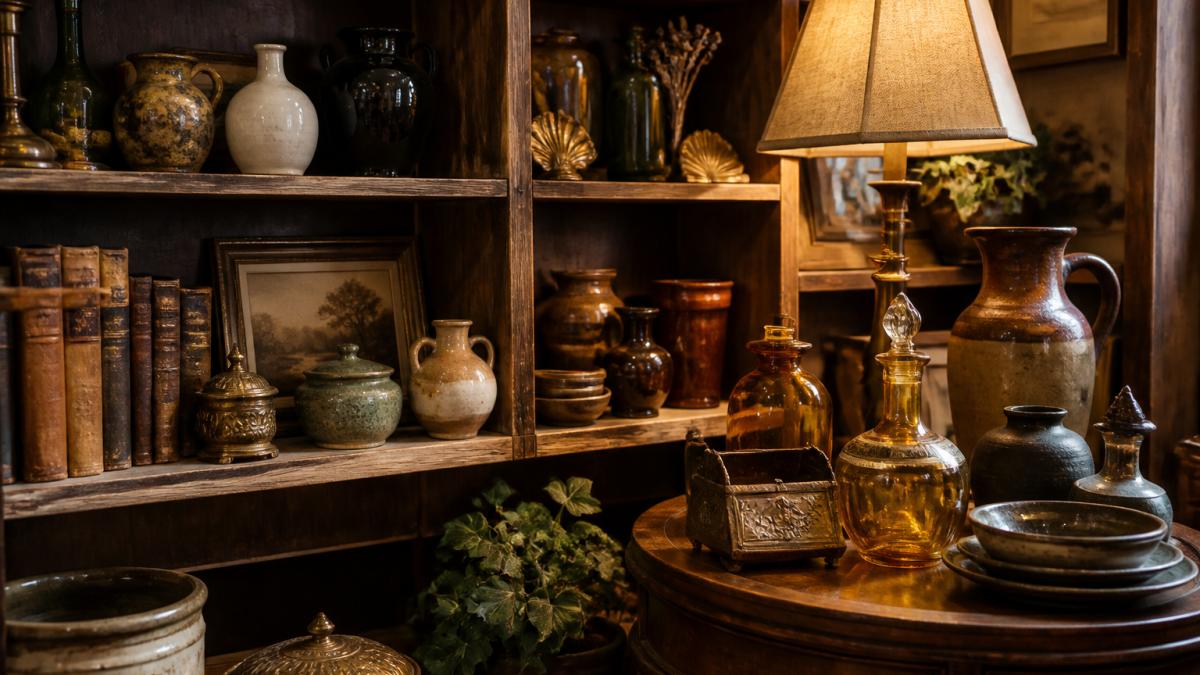
Shelving remains the most versatile display option. Open shelves allow you to arrange pieces by color, size, or narrative. Closed cabinets protect pieces from dust while still allowing visibility.
Lighting matters profoundly. Direct sunlight fades colors and damages delicate materials. Soft, warm lighting, from lamps or accent lights, highlights texture and patina without causing damage. Position lights to cast gentle shadows that reveal the three-dimensionality of pieces.
Rotation is a collector's secret. You don't need to display everything simultaneously. Rotate pieces seasonally or based on mood.
Care and maintenance preserve pieces for future enjoyment. Dust gently with soft cloths. Avoid harsh chemicals. For ceramics and glass, hand washing is gentler than dishwashers. For textiles, store in acid-free tissue paper in cool, dry spaces.
Building Your Collection: Budget, Pricing, and Long-Term Strategy
A sustainable collection grows within realistic financial boundaries. Decide what you're willing to spend annually and stick to it. This constraint actually improves your collecting because it forces selectivity.
Understanding fair pricing requires research. What factors influence the price of a vintage piece? Rarity, condition, provenance, current market demand, and the seller's overhead all play roles.
Build relationships with sellers you trust. Dealers and other collectors often offer better prices to repeat customers. They'll also alert you to pieces before they're listed publicly.
Consider the long-term trajectory of your collection. Are you building something you'll enjoy for decades, or are you acquiring pieces you'll eventually sell?
Document your collection. Keep photos, notes about provenance, condition assessments, and purchase prices. This documentation helps you track your collection's evolution, informs insurance decisions, and preserves the stories behind your pieces.
Building a vintage home collection is an act of intentionality in a world of mass production.
Frequently Asked Questions
How do I know if a vintage piece is authentic and not a reproduction?
Authentic vintage pieces show signs of age through patina, wear patterns, and manufacturing techniques specific to their era. Examine the base or back for maker's marks, country of origin stamps, or patent dates. Research the manufacturer and compare your piece to documented examples. Material composition, whether hand-painted ceramics, genuine brass, or period-appropriate glass, reveals authenticity. Documentation, provenance, or certificates add confidence, though the tactile evidence of age on the piece itself is often the most telling indicator.
What's the best way to start an antique collection if I'm on a budget?
Begin by collecting within a defined theme or era rather than acquiring random pieces. Focus on smaller, more affordable items like ceramics, glassware, or textiles before investing in furniture. Estate sales, auctions, and specialized vintage dealers often offer better value than general thrift stores. Set a monthly budget and prioritize quality and authenticity over quantity. Pieces with minor cosmetic wear cost less but retain their character and narrative. Over time, a thoughtfully assembled collection of modest pieces becomes more valuable and cohesive than scattered expensive acquisitions.
How do I display a vintage collection without making my room feel cluttered?
Curate ruthlessly: display only pieces that spark genuine connection or conversation. Use negative space deliberately, group related items on shelves or surfaces rather than spreading them throughout the room. Establish a focal point, such as a statement piece or a themed vignette, and arrange supporting items around it. Vary heights and textures to create visual interest. Rotate seasonal or less-loved pieces into storage to keep displays fresh. Lighting enhances patina and texture, making even modest arrangements feel intentional and museum-quality.
How do I care for and preserve vintage furniture and decor?
Handle vintage pieces with the respect they deserve. Dust gently with soft cloths; avoid harsh chemicals that strip finishes or damage delicate surfaces. For ceramics and glass, hand-wash when necessary using mild soap and lukewarm water. Wooden furniture benefits from occasional conditioning with appropriate oils, but never over-treat. Store items in climate-controlled spaces away from direct sunlight, which fades patina and damages textiles. For valuable pieces, consider professional restoration only when necessary to preserve authenticity. Minor wear and patina tell the piece's story and should be protected, not erased.
Where can I find vintage and antique pieces beyond typical thrift stores?
Estate sales and auctions yield authentic pieces with documented provenance. Specialized vintage dealers curate collections for quality and authenticity. Online marketplaces and dedicated vintage retailers offer broader selection and detailed condition descriptions. Antique malls house multiple dealers under one roof, allowing comparison shopping. Flea markets and vintage fairs connect you directly with collectors and dealers. Local architectural salvage yards offer reclaimed wood, hardware, and building elements. Networking within collector communities often reveals private sales and access to collections before they reach public markets.
Can I mix vintage pieces with modern furniture without clashing?
Yes, mixing eras creates depth and authenticity. Establish a cohesive color scheme or material palette as your anchor; let vintage and modern pieces share similar tones or finishes. Use vintage pieces as statement accents rather than filling an entire room with period pieces. Modern furniture provides clean lines that let vintage items stand out. Balance ornate vintage pieces with simpler contemporary furnishings. The key is intentionality: every piece, old or new, should feel chosen rather than accumulated. This blend celebrates both the story of heritage pieces and the functionality of contemporary design.
How much should I expect to spend on authentic vintage and antique pieces?
Authentic vintage varies widely based on rarity, condition, provenance, and desirability. Small decorative pieces like ceramics or glassware range from $25 to $100. Mid-sized statement pieces such as vintage wall clocks or specialty serving sets range from $150 to $400. Larger furniture or rare collectibles can exceed these ranges significantly. Fair pricing reflects the piece's age, authenticity, condition, and the dealer's expertise in authentication and curation. Reputable dealers like Smiths Attic provide detailed condition descriptions and transparent pricing that reflects the piece's true value and integrity.