
Table of Contents
- Why Vintage Decor Matters for Sustainable Living
- How to Shop for Vintage Furniture Across Multiple Sources
- How to Identify Authentic Vintage Decor and Assess Quality
- Vintage Decor for Small Spaces: Maximizing Impact
- Eco-Friendly Home Decor Ideas Using Vintage Finds
- Understanding the True Cost: Price, Transport, and Restoration
- Building Your Vintage Collection Intentionally
- Frequently Asked Questions
Last Updated: October 5, 2026
Why Vintage Decor Matters for Sustainable Living
Buying vintage decor for sustainable living reshapes how we inhabit our spaces. Selecting a mid-century lamp or hand-painted ceramic piece means joining a circular economy that challenges production and disposal.

The appeal runs deeper than aesthetics: vintage pieces carry stories, having survived generations, built with craftsmanship modern manufacturing often abandons.
Reducing Landfill Waste Through Reuse
Every vintage item you bring home is one fewer object destined for a landfill. Its textile, ceramic, wood, or metal would otherwise feed the waste crisis; reuse interrupts that trajectory.
A single ceramic bowl or brass candlestick diverts material from waste streams and avoids manufacturing impact entirely. Choosing a vintage teapot over a new one is an environmental statement.
Conserving Natural Resources
Vintage decor conserves the finite resources embedded in new production. Mining metals, harvesting timber, and processing clay carry substantial costs; a pre-loved item skips that supply chain.
New production demands energy at every stage: extraction, refinement, manufacturing, shipping, packaging. Vintage pieces have already paid that debt, maximizing the return on resources already spent.
The Durability Advantage of Vintage Furniture
Vintage furniture outlasts most modern alternatives by design. Its joinery reflects an era when longevity was expected: a dresser with mortise-and-tenon joints will outlive three flat-pack alternatives.
Durability matters economically too. A piece lasting thirty years costs less per year of use than one replaced every five, and the environmental math favors longevity.
How to Shop for Vintage Furniture Across Multiple Sources
Finding authentic vintage decor requires knowing where to look and what to expect at each venue. Estate sales, antique markets, online platforms, and specialized retailers each demand different evaluation skills.
Estate Sales and Local Auctions
Estate sales represent the purest source of vintage pieces. These liquidations often surface remarkable finds that spent decades in a single home, well-maintained, with straightforward provenance.
Local auctions operate similarly but with less curation, mixing genuine vintage with reproductions and damaged goods. The advantage is competitive bidding, though spotting pieces worth pursuing requires patience and knowledge.
Thrift Stores and Antique Markets
Thrift stores offer accessibility and affordability, with vintage decor mixed among contemporary donations.
Antique markets and outdoor fairs concentrate multiple dealers in one place, with higher prices than thrift stores but greater consistency in authenticity and condition. At Smiths Attic, our collection reflects careful selection, with the convenience of browsing from home.

Online Marketplaces and Specialized Retailers
Online platforms democratize access to vintage decor but complicate condition assessment and authenticity verification. Relying on photographs and seller descriptions, ask specific questions about damage, repairs, dimensions, and materials before committing.
Specialized vintage retailers like Smiths Attic curate with intention. Every piece is chosen for its material integrity and unique narrative, transforming personal spaces with conversation-worthy design elements.
How to Identify Authentic Vintage Decor and Assess Quality
Authenticity separates genuine vintage from clever reproductions, a difference that matters financially and philosophically. The practical question is sharper: how do you tell, in the moment, whether a piece is worth your money and safe to bring home?
A Practical Buying Checklist
Before committing to any piece, run it through a short, repeatable inspection. Experienced collectors keep a version of this in their heads; writing it down keeps you honest when a piece is beautiful and you want it to be right.
- Construction and joinery. Look underneath and behind. Dovetail joints, mortise-and-tenon connections, and hand-cut details signal older, sturdier work. Staples, Phillips-head screws in odd places, and uniform machine routing often point to later production or a repair.
- Fasteners and hardware. Slot-head screws, cut nails, and hand-forged hinges predate the mid-twentieth century. Phillips-head screws became common in furniture only after the 1930s, so their presence on a supposedly older piece is a flag worth investigating.
- Finish behavior. Older shellac and lacquer finishes craze, amber, and wear in patterns that are hard to fake. A finish that looks uniformly new on a piece claiming to be eighty years old deserves scrutiny.
Verifying Age, Provenance, and Authenticity
Examine construction methods first.
Look for maker's marks, stamps, and signatures, which authenticate origin and often indicate date ranges. Documentation strengthens confidence, though many older pieces were unmarked.
Material composition tells stories too: genuine bakelite feels different from modern plastic, copper shows age-consistent patina, and wood grain and joinery reveal solid construction versus veneered reproduction.
Provenance is the paper trail: receipts, auction tags, family notes, dealer records, prior listings.
Material-Specific Safety Considerations
Some vintage materials carry health considerations worth understanding before a piece enters your home, especially with children or pets present.
- Painted surfaces and lead. Paint manufactured before lead was phased out of residential use in the late 1970s can contain lead, particularly on older furniture, toys, and trim. Intact paint is generally low-risk, but chipping, sanding, or refinishing can release dust. If you plan to strip a piece yourself, test it first; inexpensive lead test swabs are widely available at hardware stores.
- Glazed ceramics and food contact. Some older ceramics and glazes, especially imports and brightly decorated pieces, may leach metals when used with acidic foods or hot liquids (the FDA). A beautiful vintage bowl is a superb display object; using it for daily food service is a separate decision that warrants a home lead test kit or a shift to a decorative role.
- Upholstery and textiles. Older cushions and fabrics can harbor dust, allergens, and sometimes pests. A professional cleaning or a careful vacuum with a HEPA filter is a reasonable first step. If the frame is sound but the upholstery is not, reupholstering is often the more sustainable path than replacing the piece.
Evaluating Condition and Repair Needs
Condition assessment separates affordable finds from costly restoration projects.
Create a mental checklist: Does it function as intended? Are structural elements sound? Would restoration costs exceed replacement value?
A useful rule of thumb: if a piece needs only cleaning and light touch-up, it is usually a sound buy.
Vintage Decor for Small Spaces: Maximizing Impact
Small spaces demand intentional curation. Vintage pieces in compact homes should earn their place through beauty, function, or both.
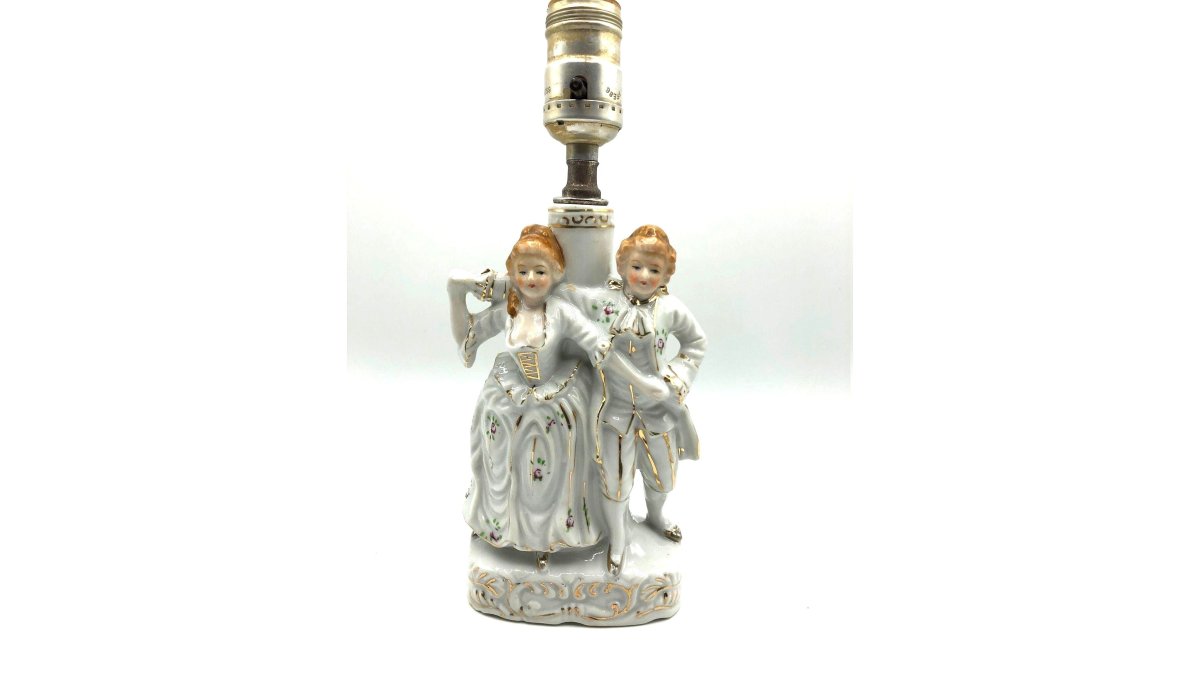
Mid Century Lamp with Colonial Couple Dancing - Pioneer Mdse. Co. Excellent →
Choosing One-of-a-Kind Statement Pieces
One exceptional vintage item creates visual interest more effectively than several mediocre pieces. A statement lamp, unusual mirror, or distinctive ceramic collection anchors a room's personality.
Statement pieces work harder in small spaces because they eliminate the need for quantity. You're displaying curated selections that justify their presence through distinctiveness rather than filling shelves.
Mixing Old and New for Modern Homes
Vintage pieces integrate seamlessly into contemporary interiors when balanced thoughtfully. A 1960s ceramic vase sits comfortably alongside minimalist furniture, and vintage textiles complement clean-lined sofas.
Modern settings amplify vintage appeal. Contemporary minimalism gives a vintage piece room to shine without competition, turning the contrast between old and new into a design feature rather than a clash.
Eco-Friendly Home Decor Ideas Using Vintage Finds
Sustainable living through vintage decor extends beyond purchasing decisions into how you integrate and repurpose these finds.
Upcycling and Restoration Approaches
Restoration breathes new life into pieces while preserving their character. A vintage wooden dresser might need refinishing but retains its structural integrity and craftsmanship, honoring the object's history while adapting it for current use.
Upcycling takes restoration further, transforming pieces into new functions: vintage suitcases become storage, old frames hold new artwork, ceramic vessels serve unexpected purposes. These projects extend lifespans and reduce consumption while celebrating creativity.
Budget-Friendly Decorating With Pre-Loved Items
Vintage shopping stretches decorating budgets substantially. A carefully selected vintage piece often costs less than new alternatives while offering superior quality and distinctiveness.
Building a vintage collection gradually reduces financial pressure while refining your taste. You're not committing to an entire room at once; you're acquiring pieces that resonate personally over time.
Understanding the True Cost: Price, Transport, and Restoration
The real expense of buying vintage decor extends beyond the purchase price, and so does the environmental impact. An honest accounting looks at the full lifecycle: what it takes to get the piece to you, make it usable, and keep it in service for another generation.
The Lifecycle View: When Vintage Stops Being the Greener Choice
The sustainability case for vintage rests on avoided production: a piece that already exists requires no new mining, milling, or manufacturing. But that advantage can shrink depending on what happens next.
- Long-distance shipping. A small ceramic piece shipped across the country in heavy packaging may carry a transport footprint that rivals the impact of buying a comparable new item locally. The greener choice is often the piece you can carry home yourself.
- Aggressive cleaning. Solvent-based cleaners, harsh stripping agents, and industrial refinishing can introduce chemical impacts that a gentle cleaning would avoid. Mild soap, soft cloths, and patience usually suffice.
- Heavy restoration. Replacing a missing leg, reupholstering a sofa, or rewiring a lamp all consume new materials and energy. Restoration is almost always preferable to replacement, but it is not free of impact, and a piece requiring extensive rebuilding is closer to a new purchase than a pure reuse.
Budgeting for Transport
Shipping vintage items demands careful handling and packaging. Fragile ceramics, glassware, and textiles require professional packing that increases costs, while local purchases eliminate shipping but require transportation logistics.
Decide your transport method before you fall in love with a piece. Shopping locally, measure your vehicle and bring blankets and straps.
Budgeting for Cleaning and Restoration
Restoration expenses vary dramatically by condition and materials. A piece needing only cleaning costs far less than one requiring structural repair or refinishing. Assess these needs before purchasing, or budget conservatively for surprises.
A simple framework helps:
- Light cleaning only. Mild soap, a soft cloth, and a little wax. Low cost, low impact, and the right answer for most sound pieces.
- Cosmetic touch-up. Minor scratch repair, a fresh coat of wax, or replacing a missing knob. Moderate cost, and usually worth it for a piece you love.
- Structural repair. Re-gluing joints, replacing a leg, or repairing veneer. This is where costs climb, and where a professional assessment is worth seeking before you buy.
When evaluating a piece, ask the seller directly about known repairs, prior restoration, and missing parts.
Measuring the Value: Reuse Versus New
A transparent comparison of reuse versus new purchase comes down to three questions. How long will you keep the piece?
Financially, the same logic applies. The purchase price is only the first line; add transport, cleaning, restoration, and your time, then divide by the years you expect to keep the piece.
Building Your Vintage Collection Intentionally
Sustainable living through vintage decor isn't about accumulating objects, it's about thoughtful curation.
Start by identifying what draws you: a particular era, specific materials, functional categories, or color palettes.
Patience pays dividends.
Document your collection: photograph pieces, note acquisition dates and sources, record restoration work.
Frequently Asked Questions
How do I know if vintage decor is authentic and well-made?
Authentic vintage pieces typically bear maker's marks, stamps, or labels on the base or back. Examine materials closely, genuine ceramic feels heavier than modern reproductions, and quality wood shows consistent grain patterns. Look for signs of age appropriate to the era: patina on metal, slight color variations in glass, and wear patterns that match the piece's purported age. Reputable vintage retailers provide documentation about provenance and materials, which adds confidence in authenticity.
What should I check before buying secondhand home decor?
Inspect the piece in person when possible, or request detailed photos from multiple angles if buying online. Check for structural integrity, wobbling legs, loose handles, or cracks in ceramics indicate repair costs ahead. Verify materials, especially for items that contact food or skin. Ask about the item's history and any restoration work already completed. Understand return policies and shipping costs, as these affect the true purchase price of vintage decor.
Can vintage decor really reduce my home's environmental impact?
Yes. Buying pre-loved items prevents perfectly functional pieces from reaching landfill waste, eliminating the environmental cost of new production. Vintage furniture and decor typically outlast mass-produced alternatives due to superior craftsmanship and durable materials, extending the lifespan of what you own. By choosing one-of-a-kind pieces over newly manufactured items, you avoid the resource consumption and carbon footprint associated with factory production, shipping, and packaging of new goods.
Is a 20-year-old item considered vintage?
Generally, items from the 1980s and earlier are classified as vintage, though the definition varies by collector community. A 20-year-old piece (from around 2006) typically falls into the 'retro' or 'contemporary vintage' category rather than true vintage. However, what matters most for sustainable living is the item's condition, durability, and whether it diverts waste from landfills, age alone doesn't determine value or environmental benefit.